OFFICIAL STUDIO RELEASES
One half of the legend is his studio work. Jimi Hendrix was prolific and much of that work was recorded and survives. When not in the studio or playing live he was capturing his ideas on tape at home or when gigging. His studio work released during his life time is outstanding and is the basis for his reputation. The proliferation of early studio work reflects the many takes as he perfected his songs to his standard e.g. Gypsy Eyes took over 50 takes. His later studio work reflects the many ideas he was working on but unfortunately not always reaching fruition.
Any self respecting compilation of essential modern music would feature (and they would be pretty high on that list to!) Jimi's three studio albums released during his lifetime:
Any self respecting compilation of essential modern music would feature (and they would be pretty high on that list to!) Jimi's three studio albums released during his lifetime:

While it created a kind of it before AYE and after AYE timeline in music it was not unprecedented with other contemporary bands: Cream, The Doors, Grateful Dead, Pink Floyd and Velvet Underground, releasing ground breaking debut albums around the same time. Indeed, The Experience already charting three singles before AYE, (Hey Joe, Purple Haze and The Wind Cries Mary) so AYE couldn't have been that much of a surprise. However, it did lay a foundation for Jimi's future work and predominated his live work across his short career.
The UK release was all original material but the US version replaced three songs with the first three singles and has a different track order. The context for the US release was somewhat different. Hendrix was unknown in the US before Monterey so his first album included of his first three singles and as such was very close to his live set material. As a consequence, AYE was bought in large numbers of fans hearing much of the material during his US tours.
I was familiar with the singles and my first Jimi Hendrix album was Axis: Bold As Love. The quality of the recording had advanced by ABAL and this probably prejudiced my view towards the earlier AYE material. My impressions of AYE album are a good album, lots of well known material and the mainstay of live shows through to mid '69 The lyrical themes and studio treatment were undeveloped compared to Axis and with many of the tracks was continual rotation through the live set lists I've become a bit bored of AYE. Nevertheless, it's a album of significant historical importance and one that should be in all collections.
Highlights (UK album): Red House, Love Or Confusion, 3rd Stone From The Sun and Are You Experienced?
Lowlights: Foxy Lady, Fire. Fun to play but boring to listen to when you listen to given how often they feature in his live sets.
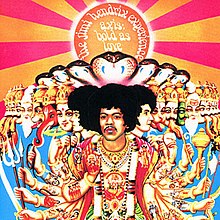
I still remember the first day I listened to this album and what a revelation that was. It's like Jimi came from another planet. Nobody had even imagined sounds like it, let alone played them on a guitar. Jimi's guitar playing was so much better and the lyrically far more sophisticated than AYE. A much overlooked album. Guess it doesn't fit in with the "Wild Man of Borneo" image. A great studio album but not covered live to any extent - Little Wing did get an occasional airing and only Spanish Castle Music featured regularly in the live sets. I still don't understand how he composed this music!
Highlights: All tracks (bar EXP, which is only fun once).

I wanted this album for so long but couldn't afford a double album $11.95. Like ABAL I bought the album on spec having only previously heard All Along The Watchtower (Is it possible for any movie featuring the Vietnam war not to include a snippet of AATW?).
Highlights: Obviously Voodoo Child (Slight Return) and AATW but the whole album is quite an experience. More deserving of the "ground breaking" title than AYE. It was very well recorded. Timeless. It would chart if were being released today.
POSTHUMOUS RELEASES
Jimi never released his forth album and while he did recorded a proposed track listing we're only guessing what his intentions may have been. Jimi's management raced to release Cry Of Love and Rainbow Bridge after his death. I guess they though he was a spent force and looked to capitalise on his popularity while it lasted. In general the posthumous material is good but incomplete and chronologically incorrect with the two CDs below being better compilations than anything previously released.
 First Rays Of The New Rising Sun (FROTNRS): Brings together much of the material from Cry Of Love and Rainbow Bridge much of which must have been destined for his forth album although still a work in progress e.g. Hey Baby.
There are some exceptions like My Friend which was a left over from the Electric LadyLand sessions. It is chronologically out of place but thanks to it's original listing on the first release after his death, Cry Of Love, seems destined to be represented as part of FROTNRS. It's a good Rainy Day Women style song but it probably wouldn't have featured on any album released during Jimi's lifetime. Nevertheless, it's strong material, catchy lyrics and well recorded so what the hey. I'm not sure FROTNRS would have been well received had it been released during his lifetime. Jimi was becoming a progressive musician with hints of soul and funk entering his music. It's not the genre that made him famous and if not for his death I wonder whether his audience would have followed him into this new direction. We'll never know.
South Saturn Delta: While well regarded, I find this CD a little patchy. There's some fine material but like My Friend (above), Jimi probably wouldn't have released any of these tracks, at least in this form e.g. Power Of Soul had already released a live version on Band Of Gypsies.Jimi never released his forth album and while he did recorded a proposed track listing we're only guessing what his intentions may have been. Jimi's management raced to release Cry Of Love and Rainbow Bridge after his death. I guess they though he was a spent force and looked to capitalise on his popularity while it lasted. In general the posthumous material is good but incomplete and chronologically incorrect with the two CDs below being better compilations than anything previously released.
There are some exceptions like My Friend which was a left over from the Electric LadyLand sessions. It is chronologically out of place but thanks to it's original listing on the first release after his death, Cry Of Love, seems destined to be represented as part of FROTNRS. It's a good Rainy Day Women style song but it probably wouldn't have featured on any album released during Jimi's lifetime. Nevertheless, it's strong material, catchy lyrics and well recorded so what the hey. I'm not sure FROTNRS would have been well received had it been released during his lifetime. Jimi was becoming a progressive musician with hints of soul and funk entering his music. It's not the genre that made him famous and if not for his death I wonder whether his audience would have followed him into this new direction. We'll never know.
 Some content like early try outs titled Little Wing and Angel - (both actually early versions of Angel) are a little tedious, starting a trend of a grab bag approach presented in the extensive box sets The Jimi Hendrix Experience and West Coast Seattle Boy.
It would have been far more effective if the CD focused on the intermediate period with leftovers from Electric Ladyland through to FROTNRS in chronology order:
Jimi made his reputation in the studio but the legend was created live. Seeing Jimi live was an experience and everybody (especially early in his career) knew they were seeing and hearing history being made. Jimi toured extensively (if not widely) during his short career and the audience and his record company took every opportunity to capture that experience. The reality of touring continuously across America, while financially attractive, didn't always produce good recorded results and the audience wanted to the hits. So much of the earlier sets focused on material from his first album. Over time Jimi introduced a bit more variety into the set.
During his lifetime, there were only snippets of his live material on offer: the incomplete Monterey, a few tracks from Woodstock and the contractual album (one Jimi owed Capitol records), Band Of Gypsies. After his death, and especially over the last 20 years a lot more live material has turned. A lot of this material was recorded professionally by mobile recording units or soundboards. However, the lion's share of his live work now comes from audience tapes.
The high quality live shows to consider include:
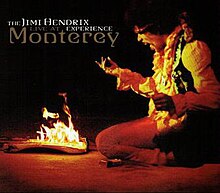 Jimi Live At Monterey: Jimi's breakthrough into America. Well recorded and the stand out act from the festival. His reputation in America started here. A combination of hist first three singles and Are You Experience and live favourites from the time: Killing Floor, Rock Me Baby (which would morph into Lover Man), and Wild Thing. I actually am so bored with Wild Thing. It is dramatic to see him destroy his guitar and set it on fire but there is nothing of musical value in this or any other version of Wild Thing. Anyway, no other live material from '67 has appeal of the set played here, no other live performance better demonstrates his impact live or is as significant to his career as this album. A must have.
- 1968-69: Electric Ladyland leftovers - studio work and jams up to the demise of the Experience June 69 featuring including: Tax Free, South Saturn Delta, My Friend, Somewhere, Look Over Yonder, Peace in Mississippi, Hear My Train a Comin', Star Spangled Banner;
- 1969-70: Gypsy Sun and Moon and Band Of Gypsies - the exploration of a bigger band format and excursions into soul music including: Message To Love, Power Of Soul, Crash Landing, Burning Desire, Trashman; Earth Blues, Stepping Stone/Izabella (original single);
- 1970: The final year with Billy Cox and Mitch Mitchell: Drifter's Escape, Pali Gap, Lover Man, Bleeding Heart.
Jimi made his reputation in the studio but the legend was created live. Seeing Jimi live was an experience and everybody (especially early in his career) knew they were seeing and hearing history being made. Jimi toured extensively (if not widely) during his short career and the audience and his record company took every opportunity to capture that experience. The reality of touring continuously across America, while financially attractive, didn't always produce good recorded results and the audience wanted to the hits. So much of the earlier sets focused on material from his first album. Over time Jimi introduced a bit more variety into the set.
During his lifetime, there were only snippets of his live material on offer: the incomplete Monterey, a few tracks from Woodstock and the contractual album (one Jimi owed Capitol records), Band Of Gypsies. After his death, and especially over the last 20 years a lot more live material has turned. A lot of this material was recorded professionally by mobile recording units or soundboards. However, the lion's share of his live work now comes from audience tapes.
The high quality live shows to consider include:
- Monterey Festival, Monterey, 18th June 1967. The full set has been available for since 1986 and re-released in 2007.
- Winterland, San Francisco, 10-12th October 1968. Recently released in box set.
- Konserthuset, Stockholm, 9th January 1969. Not officially released but a great show
- Royal Albert Hall, London, 24th February 1969. A few tracks from the show has been officially released. The full set, lifted from the movie sound track, is available in semi-legal form. Neither the video or the music has ever been officially released.
- Forum, Los Angeles, 26th April 1969. Released on Lifelines but not currently not available
- Sports Arena, San Diego, 24th May 1969. Released on Stages but not currently available
- Woodstock, NY, 18th August 1969. Completely available on Live at Woodstock
- Fillmore East, New York, 31st December 1969 - 1st January 1970: The contractual album
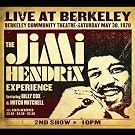
- Community Theatre, Berkeley, 30th May 1070. The second set has been officially released on Live at Berkeley.
- Atlanta, Georgia, 4th July 1970. Partially released on Stages and now completely available on Freedom: Atlanta Pop Festival.
- Maui, Hawaii, 30th July 1970. To be released 28/11/20 on Live in Maui.
- Isle of Wight Festival, England 30th August 1970. Probably the worst Jimi has ever played to a live audience. Nevertheless, it's a complete show and his last official recording. Now available on Blue Wild Angel: Live at the Isle of Wight
I've picked five shows as the best representation of his live material 67-70 based on:
- Jimi (and the band) playing well;
- The show being well recorded and;
- Some originality to the performance.
- Variation in the set list.
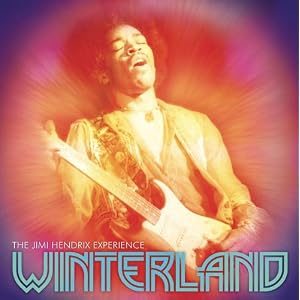
Winterland: This recently released 4 CD set is a comprehensive if still incomplete account of his Winterland concerts from '68. It's professionally recorded (likeMonterey) and Jimi is in fine form. Theopportunity to relax and concentrate for 3 days of show also must have been a welcome break from the whistle stop shows from the rest of the year. It's an interesting set list featuring:
- the regular studio tracks (mostly from Are You Experienced)
- the recently released Voodoo Child from Electric Ladyland
- Some rarities like Are You Experienced? and Manic Depression.
- Stage jams with other musicians including Jack Cassidy on Bass, Virgil Gonzales on flute and Herbie Rich on organ, so there's a bit of variety to the show.
- Extended jamming (one version of Red House lasts more than 15 minutes)
- Stella versions of Like A Rolling Stone are outstanding and the best ever version of Hear My Train A Comin'
 Woodstock: It's hard to believe now. We have so much Jimi material :DVDs, CDs, movies, books, multimedia, etc. However, back in the 60s there were only fleeting glimpses (we couldn't record the video back then) of rock music, which was a counter culture. Woodstock was my first opportunity to see Jimi, live in full colour and great sound. Originally, Jimi's few tracks were only available on the expensive triple album. Overtime Jimi's set was promoted to a individual release, first as an abridged set and then the (almost) full set as presented here that we really got hear Jimi at Woodstock.
This set finds Jimi playing in a bigger band setting which should be viewed as experimental because he soon reverted to his trio format. Certainly, it's only the combination of Jimi on lead, Billy Cox on Bass and Mitch Mitchell on drums that succeeds at Woodstock. The other musicians might as well not be there.
There is much of the standard 1968-69 fare and while there were a couple of new numbers, like Jam Back At The House and Izabella, they didn't exactly catch fire. The standout performances and historic perspective of Woodstock are remembered by:
- Star-Spangled Banner. Jimi had been playing since 1968 but this was the first time such a wide audience got to hear it and it is his best version!
- Purple Have seamlessly linked in the medley and his best ever live solo for this song
- Finishing with the instrumental and Villanova Junction. A dramatic change of pace was a perfect note for the Woodstock Movies to end on (although Jimi's set ended with one last song, Hey Joe). What's remarkable about VJ is the ease he plays this non-entity of a song. Grace and beauty. It was just so easy for him.

Band Of Gypsys: The last album released during his lifetime. While the Woodstock triple album had been available for a couple of months this single album was much more affordable for a poor teenager. 1970 was a great year for live albums with:
- The Who Live At Leeds
- Rolling Stones, Get Your Ya, Ya's out and
- Historic Performances Recorded at the Monterey International Pop Festival with one side of the album dedicated to Jimi (the other half featuring Otis Redding).
I guess Woodstock developed an market for artists in a live setting and technological advances allowed the live setting to be effectively captured for the first time. From Jimi's perspective this was an obligation left over from a previous contract with Capitol Records. So with one record Jimi both gave fans a taste of his live music and release his outstanding contractual obligation. Having said that, the material is still first rate and this album presents the best material from the two night at Fillmore East over new year 1970.
Like Woodstock, this album presents Jimi going through a transitional phase, in trio format but with Buddy Miles on drums. Buddy is not a free form drummer. He's more of a time keeper and in combination with Billy Cox laid down a fat backing for Jimi's guitar work to shine brighter than his other live combos. Indeed the version of Machine Gun is probably Jimi's most inventive and powerful piece ever captured live. Buddy sings a bit and this gives some indication of how Jimi might have fitted into different band formats had he lived longer.

Live At Berkeley: While Jimi was more productive in the studio in 1970, his live shows weren't recorded as much as the 68-69 period. However, the professionally recorded shows are of better quality. The Berkeley concerts were the best released live set from 1970 (although we would all love to hear the full professionally recorded Maui sets). The two stand out tracks are Johnny B. Goode and Hear My Train A Comin' (previously released on Hendrix in the West and Rainbow Bridge respectively).